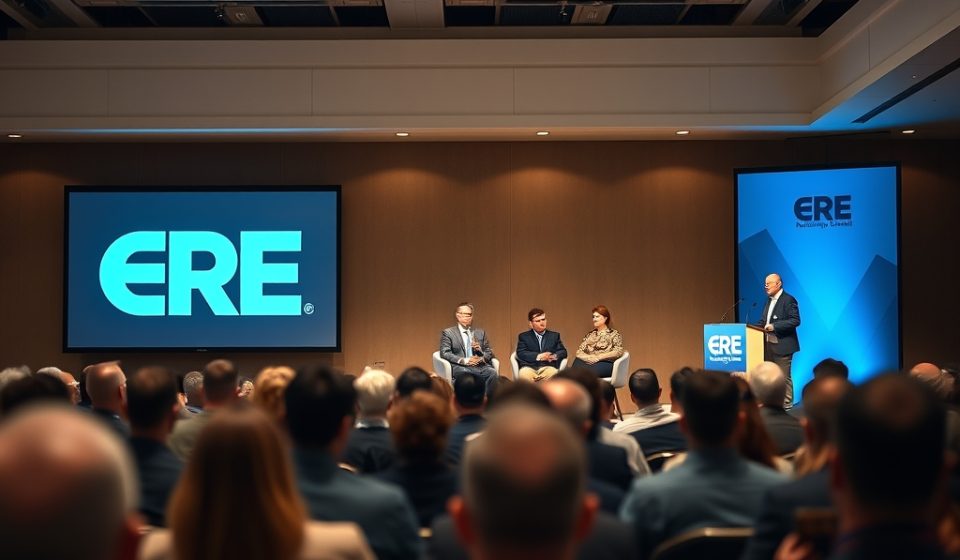
At ERE Recruiting Innovation Summit, Veterans and Talent Leaders Confront the Hiring Gap

Bridging the Military-Civilian Employment Divide
Most employers readily claim to support veteran hiring, but translating that goodwill into actual employment figures remains a significant challenge across corporate America. At the recent ERE Recruiting Innovation Summit, two military veterans took the stage to guide talent acquisition professionals through the precise points where veteran hiring pipelines break down.
The annual event, which coincided with Veterans Day, aimed to spotlight a talent pool that many organizations pay lip service to but fail to effectively reach. During an opening keynote session, a surprise performance by The 524 Brass Band—comprising current and former Navy and Marine Corps bandsmen—energized the audience before shifting into a frank discussion about the realities of military transition.
The Data Behind the Rhetoric
The discussion opened with a telling show of hands among the assembled talent acquisition leaders. While the vast majority indicated that their organizations support veteran hiring, far fewer knew what percentage of their recent hires were veterans, and an even smaller fraction could confirm that veterans accounted for more than five percent of their workforce additions.
Data from a September RAND study underscores this disconnect. Nearly eighty percent of S&P 500 companies feature veteran programs on their corporate websites. However, veterans accounted for just 2.4 percent of new hires at S&P 500 federal contractors—less than half of the federal government’s 5.1 percent planning benchmark. Furthermore, almost no major corporations track or report whether veterans advance into management or receive promotions.
Language Barriers and Overly Rigid Requirements
Panelists Bradley Garner, Director of Talent Acquisition at General Atomics, and Commander Sean Mulrooney, a retired Navy helicopter pilot who runs Celtic Anchor, detailed the obstacles veterans face during the application process. Mulrooney highlighted how corporate recruiters often struggle to interpret military experience, reading standard service titles as a foreign language. Responsibilities such as planning evacuation routes for presidential visits are frequently overlooked by recruiters who fail to recognize the underlying event management and security expertise.
Garner pointed out that automated job descriptions frequently screen out qualified veterans before human eyes ever review a resume. Corporate requirements demanding familiarity with specific software or narrow credentials often exclude candidates who possess the necessary core competencies. Garner noted that his own internal rule requires removing any job requirement that his recruiters cannot clearly explain.
Actionable Strategies for HR Teams
To overcome these hurdles, the panelists recommended pairing hiring teams with veterans already embedded within the company through employee resource groups or mentoring programs. Military spouses, who frequently navigate complex relocation and administrative systems, can also serve as valuable translators of service experience.
Garner emphasized the importance of measurement, noting that General Atomics successfully raised veteran hires to over 15 percent by tracking data and presenting it to executive leadership. For organizations launching new initiatives, he recommended the Department of Defense SkillBridge program, which allows transitioning service members to spend three to six months gaining civilian business experience prior to discharge, provided employers treat it as a genuine skills exchange rather than free labor.
In closing, the speakers highlighted a concerning trend: an increasing number of veterans are concealing their military service on applications or using artificial intelligence to remove references to their background. Talent acquisition professionals were urged to view this need for concealment as a critical warning sign that corporate cultures must address.