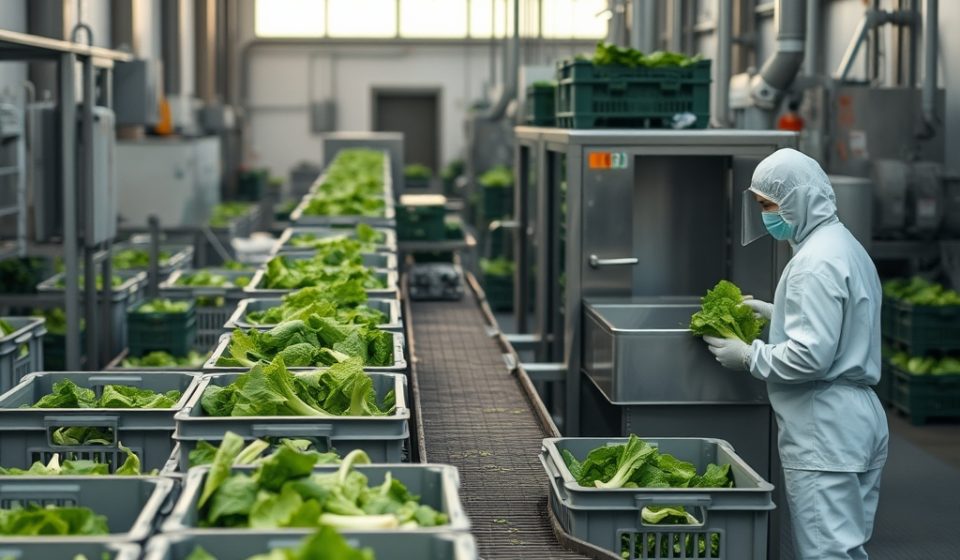
Immigration Enforcement May Raise Food-Safety Risks by Disrupting Food-Industry Workforces

Heightened immigration enforcement could affect food safety as well as workforce availability, according to an analysis by Jacob M. Monty, an attorney with Monty & Ramirez LLP. The article argues that raids and fear of deportation can leave farms and food-processing operations short of experienced workers, making it harder to maintain production schedules, sanitation routines and safety oversight. The proposed link is not proof that enforcement caused any particular outbreak, but it highlights how workforce disruption can become an operational risk for employers and consumers.
Why workforce continuity matters
The analysis places the concern in an industry context where immigrant workers make up a substantial share of the labor force. It cites estimates that approximately 86% of agricultural workers are foreign-born, with about 45% undocumented, and that roughly 23% of meatpacking workers are undocumented. Immigrants also account for about one-third of hospitality employees, including more than one million undocumented workers, according to the figures cited in the article. Those sectors include jobs central to harvesting, processing, handling and sanitation.
Monty argues that enforcement-related absences can affect more than headcount. Experienced workers may hold practical knowledge of equipment, production routines and food-handling procedures, while supervisors are responsible for coordinating work and maintaining oversight. If employees are detained, leave a job or stay home because they fear being targeted, employers may have to reassign duties or operate with fewer trained people. The analysis suggests that rushed substitutions or reduced supervision could leave important safety tasks less consistently performed.
Operational disruption across the supply chain
The article describes reports of major staffing losses at agricultural sites following increased enforcement activity. Farmers in California, it says, have reported worker absences of as much as 70%. It also cites a Nebraska plant that lost 107 employees in a single raid, including supervisors responsible for machinery and safety. These examples illustrate the potential scale of sudden disruption, although the source does not establish that every absence or enforcement action leads to unsafe food handling.
Labor shortages can also interrupt time-sensitive work. Crops may go unharvested, while disrupted milking schedules can contribute to spoiled milk, according to the analysis. The article estimates that unharvested produce has cost California farms between $5 billion and $7 billion and says farms in New York and New Jersey have lost millions from spoiled milk. When employers cannot maintain staffing, they face difficult choices between allowing products to spoil and continuing operations with fewer workers. Either outcome can strain businesses and supply chains.
Replacing workers may not be immediate. The analysis notes that employers can use the H-2A visa program to recruit foreign agricultural workers for jobs they cannot fill with domestic labor, but says the program carries employer obligations involving housing, wages, transportation and workplace protections. It has also faced investigations involving allegations such as passport confiscation, trafficking and forced labor. Mechanization is another possible response, but the source says investment can be difficult for small and medium-sized farms. These constraints can limit how quickly employers adapt to workforce losses.
Food-safety implications and HR considerations
The food-safety argument is grounded in the importance of consistent staffing, training and supervision. If an operation is understaffed, routine checks or sanitation procedures may be delayed, performed less frequently or assigned to workers who have not received adequate preparation. That is a risk pathway described by the analysis, not a finding that a particular enforcement action produced a specific contamination event. For HR and operations teams, the issue connects workforce planning with the practical ability to carry out safety-sensitive work reliably.
The article points to a Cyclospora outbreak associated with Taylor Farms de México in Guanajuato, reporting 12,883 cases and 570 hospitalizations. It also cites a 2014 report alleging that Taylor Farms workers were threatened with calls to Immigration and Customs Enforcement or use of E-Verify if they complained about conditions. These claims provide context for the author’s argument about worker vulnerability; they do not establish that immigration enforcement caused the outbreak. The analysis further contends that production disruptions could increase reliance on imports, where U.S. regulators may find monitoring more difficult, but does not quantify that effect.
For HR professionals, the account underscores how workforce stability, credible reporting channels, training and staffing plans intersect with food-safety responsibilities. Employers in food-related sectors may need to consider whether essential tasks depend on a small number of experienced employees and whether coverage plans preserve appropriate supervision. The source does not offer a legal determination or establish a direct causal link between enforcement and outbreaks. Its central point is that disruption to workers can ripple through production and sanitation systems, making continuity and safe working conditions important parts of managing operational risk.