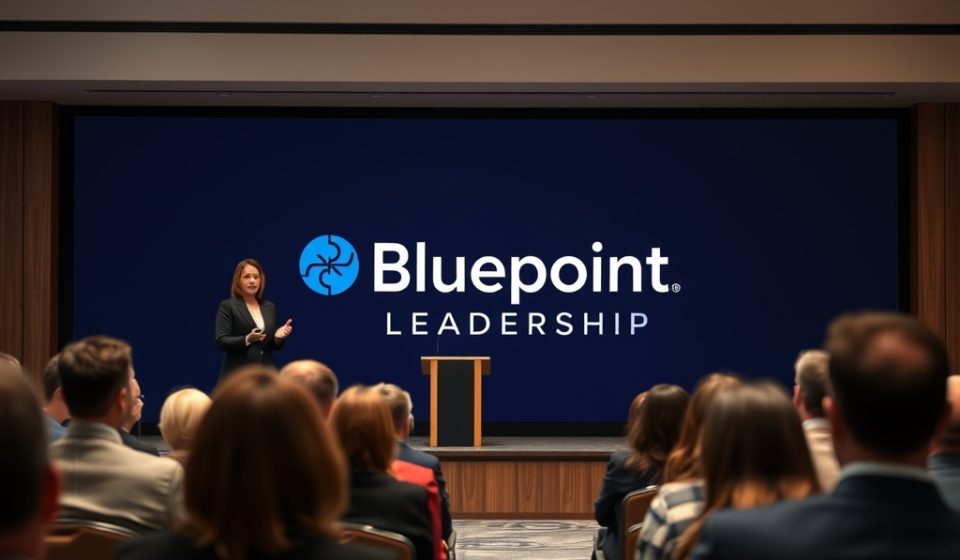
Bluepoint Leadership Session at SPARK Talent Examines the Legacy HR Leaders Leave

A session led by Joan Peterson of Bluepoint Leadership at SPARK Talent focused on a question that can be easy to overlook amid HR’s daily demands: what lasting mark do HR leaders want to leave in their organizations? Peterson, the company’s vice president, master facilitator and leadership coach, invited attendees to consider how their choices and interactions can shape colleagues’ working lives well beyond the completion of a project or program.
The discussion placed employee recognition within a broader view of HR’s contribution. Peterson described that contribution as extending beyond policies, programs and measurable results to include whether people feel seen and supported. For HR professionals balancing operational work with employee engagement and leadership support, the session offered a prompt to reflect on the human effects of their work alongside its formal deliverables.
A short prompt for a long-term question
Peterson drew on the six-word memoir exercise popularized by Smith Magazine to ask participants to distill the legacy they hoped to leave into six words. The format gave attendees a concise way to describe what they wanted colleagues to remember about their influence, while opening a wider conversation about the practical and personal dimensions of HR leadership.
In framing the exercise, Peterson asked participants to think about the imprint they wanted to make. That imprint might take the form of programs, measurement or metrics, she explained, but it could also be the experience of an individual who felt noticed. Her point was that considering a desired legacy can affect how leaders show up in the present, rather than leaving reflection until a role or project has ended.
Attendees shared a range of six-word statements. The themes included staying true to oneself, demonstrating the practices and behaviors leaders hope employees will adopt, and creating stability for teammates who may join the organization later. The range of responses underscored that participants did not define legacy in only one way: it could involve visible organizational structures as well as everyday conduct and the conditions people inherit.
Recognition through trust and example
The session connected that idea of legacy to the way HR leaders build trust. Peterson said that people are better positioned to be themselves when leaders help establish that environment, and that doing so requires leaders to bring their own authentic selves to their work. In this framing, recognition is not limited to a formal award or a scheduled appreciation campaign. It can also be conveyed through interactions that signal that an employee’s perspective and contribution have been noticed.
For HR teams, the distinction matters because recognition practices operate at more than one level. Formal programs can make appreciation visible and consistent, while managers’ daily behavior influences whether employees experience that appreciation as credible. The session did not prescribe a particular program or measurement approach; instead, it asked HR professionals to consider how their choices, conduct and relationships contribute to the experience they hope to create. Metrics and programs may document outcomes, but they do not by themselves capture every personal impression left by a workplace interaction.
Making HR’s contribution visible
Peterson’s prompt also addresses a familiar challenge for HR: much of the function’s influence is distributed across projects, decisions and conversations, rather than concentrated in a single outcome. Reflecting on a desired legacy can help leaders connect those varied responsibilities to the experience they want employees to have. It also recognizes that colleagues may carry forward practices and workplace conditions shaped by HR long after the original decision-makers have moved on.
The session’s central message was that respecting the importance of HR’s own work is a starting point for shaping that influence. For employers, the discussion is a reminder to consider both the systems HR establishes and the signals leaders send through their behavior. For employees, those signals can affect whether they feel acknowledged and able to contribute as themselves. Peterson’s six-word exercise offers no single definition of a successful legacy, but it gives HR leaders a practical question to revisit: what do they want people to experience because of the way they lead today?